
Liberation Day and the Tariff Reckoning: What April 2025 Tells Us About Trade Wars Past and Present
The April 2nd Announcement: A Moment That Felt Familiar and Foreign
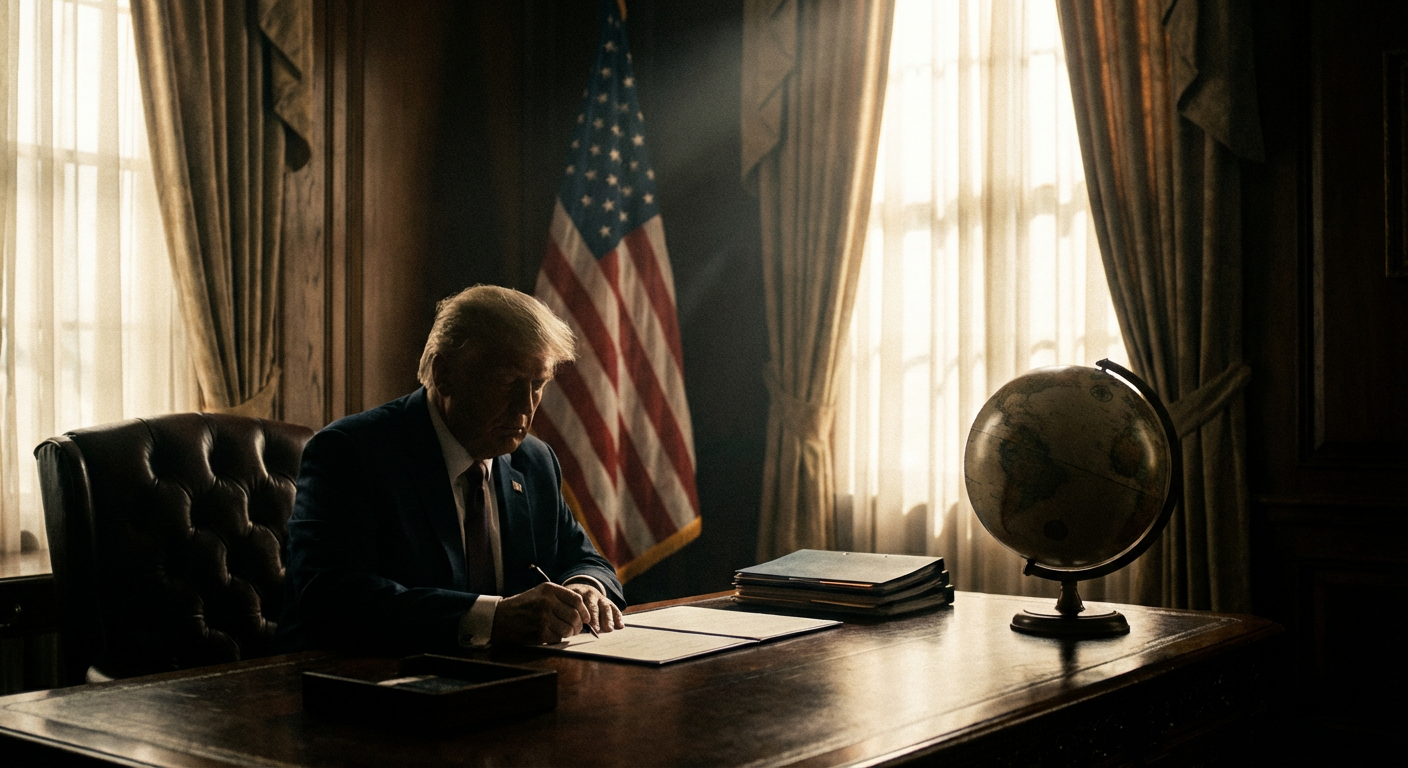
On April 2, 2025, President Trump signed an executive order that would reshape global trade in ways we’re still measuring nearly a year later. The announcement of sweeping reciprocal tariffs felt, in some ways, like watching history repeat itself—except the script had been modified, the stage expanded, and the stakes made clear from day one. The tariff package included a 10 percent baseline duty on all imports and targeted duties reaching as high as 145 percent on Chinese goods. If you’ve studied trade policy history, you recognize the echoes of 1930 and the Smoot-Hawley Act, when protectionist impulses led to retaliatory cycles that deepened the Great Depression. But you also recognize that this April announcement operated at a speed and scale that Smoot-Hawley’s architects couldn’t have imagined.
What made this moment distinct wasn’t just the numerical aggressiveness of the tariffs. It was the deliberate invocation of “Liberation Day”—framing trade protectionism as emancipation rather than restriction. That rhetorical move matters as much as the policy itself, because it tells us how the administration wanted Americans to understand what was about to happen. This wasn’t about isolationism, the messaging suggested. This was about independence. Whether that framing held up under the weight of real-world consequences is precisely what the following months would test.
The Immediate Fallout: When Allies Become Competitors
The European Union didn’t take long to respond. By mid-April, while negotiations theoretically remained open, the EU signaled its willingness to impose counter-tariffs on approximately 21 billion euros worth of American goods. What’s instructive here is the timeline. Unlike historical trade conflicts that unfolded over months or years of escalation, this one played out in weeks. The EU reached a 90-day truce with the Trump administration by May 2025, which meant the initial shock was absorbed, but the underlying tensions were frozen rather than resolved. Think about it in terms of conflict resolution—a truce isn’t a victory or a defeat. It’s a pause that requires both sides to be genuinely invested in what comes next.
China’s response followed a more confrontational path. Retaliatory tariffs on American agricultural exports climbed to 125 percent, which meant Iowa corn farmers, Texas cotton producers, and countless rural communities faced a sudden, severe market shock. The USDA responded with emergency aid commitments exceeding 14 billion dollars to affected farm states. This is where the human cost of trade policy becomes impossible to abstract away. These weren’t just percentage points in an economic model. They were loan guarantees, price supports, and relief programs meant to prevent agricultural communities from collapsing under the weight of decisions made in Washington.
The Economic Measurement: What the Numbers Actually Tell Us
One of our responsibilities as engaged citizens is looking seriously at what economists tell us about policy consequences, even when those consequences are uncomfortable. The Peterson Institute tariff impact analysis estimated that the tariff package would reduce average American household real income by approximately 2,600 dollars annually. Think about that number in concrete terms. For a family already navigating healthcare costs, housing expenses, and childcare, that’s a real reduction in purchasing power. It’s the difference between affording a modest vacation or a home repair, between saving for education or not.
These figures weren’t speculative. They were grounded in detailed modeling of supply chains, consumer behavior, and inflation effects. The tariffs didn’t just affect the final price of goods—they rippled backward through production chains, hitting manufacturers who relied on imported components, construction companies dependent on foreign materials, and retailers trying to manage margin compression. By the final quarter of 2025, the IMF World Economic Outlook October 2025 downgraded global GDP growth by 0.8 percentage points, attributing the revision directly to trade fragmentation from the new tariff regime. That decline sounds modest until you remember it represents the difference between economic stability and recession in many countries dependent on global trade.
Historical Parallels: The Limits of Analogy in Real Time
When we look back at trade wars—the Smoot-Hawley disaster of the 1930s, or even the steel and aluminum tariffs of 2018—we find patterns but not blueprints. Smoot-Hawley raised average tariff rates to nearly 45 percent and touched off retaliatory cycles that helped deepen the Depression. Trump’s April 2025 package was more targeted but also more extensive, reaching into every sector simultaneously. That difference matters because it changes the calculus. A broad-based tariff regime can’t be easily carved out for particular allies or exempted for particular sectors without making the underlying logic look arbitrary. That creates pressure toward escalation rather than negotiation.
There’s an important limitation to historical comparison that we should acknowledge, though. The global economy of 2025 runs on supply chains, financial integration, and information flows that simply didn’t exist in 1930 or even 2018. That makes prediction harder, not easier. We can identify similar patterns—tariff announcements followed by retaliation, farmers bearing concentrated costs while benefits diffuse—but the mechanisms are different enough that we can’t just transplant historical outcomes onto current events. What we can do is recognize that trade wars produce costs born unequally, that retaliation tends to follow imposition, and that reversing course becomes harder the longer the conflict goes on.
What Comes Next: Your Role in Understanding Trade Policy
By early 2026, the tariff architecture established on April 2, 2025 had begun reshaping trade alliances in ways that will take years to fully understand. Some relationships—particularly within the EU—moved toward managed coexistence through the 90-day truce framework. Others, particularly with China, showed no signs of softening. Most significantly, the episode demonstrated that trade policy isn’t technical or abstract. It’s intimate. It touches farmers’ bottom lines, manufacturers’ supply chains, and household grocery bills.
As citizens, the question worth asking isn’t whether tariffs are inherently good or bad. Economists reasonably disagree about that. The real question is whether you understand what your representatives are choosing when they support or oppose specific tariff regimes. What costs are they accepting? Who bears those costs? What alternatives were considered and rejected? These are the questions that move you from passive spectator to informed participant in democracy. That’s the real work—not having all the answers, but knowing which questions matter and being willing to pursue them.