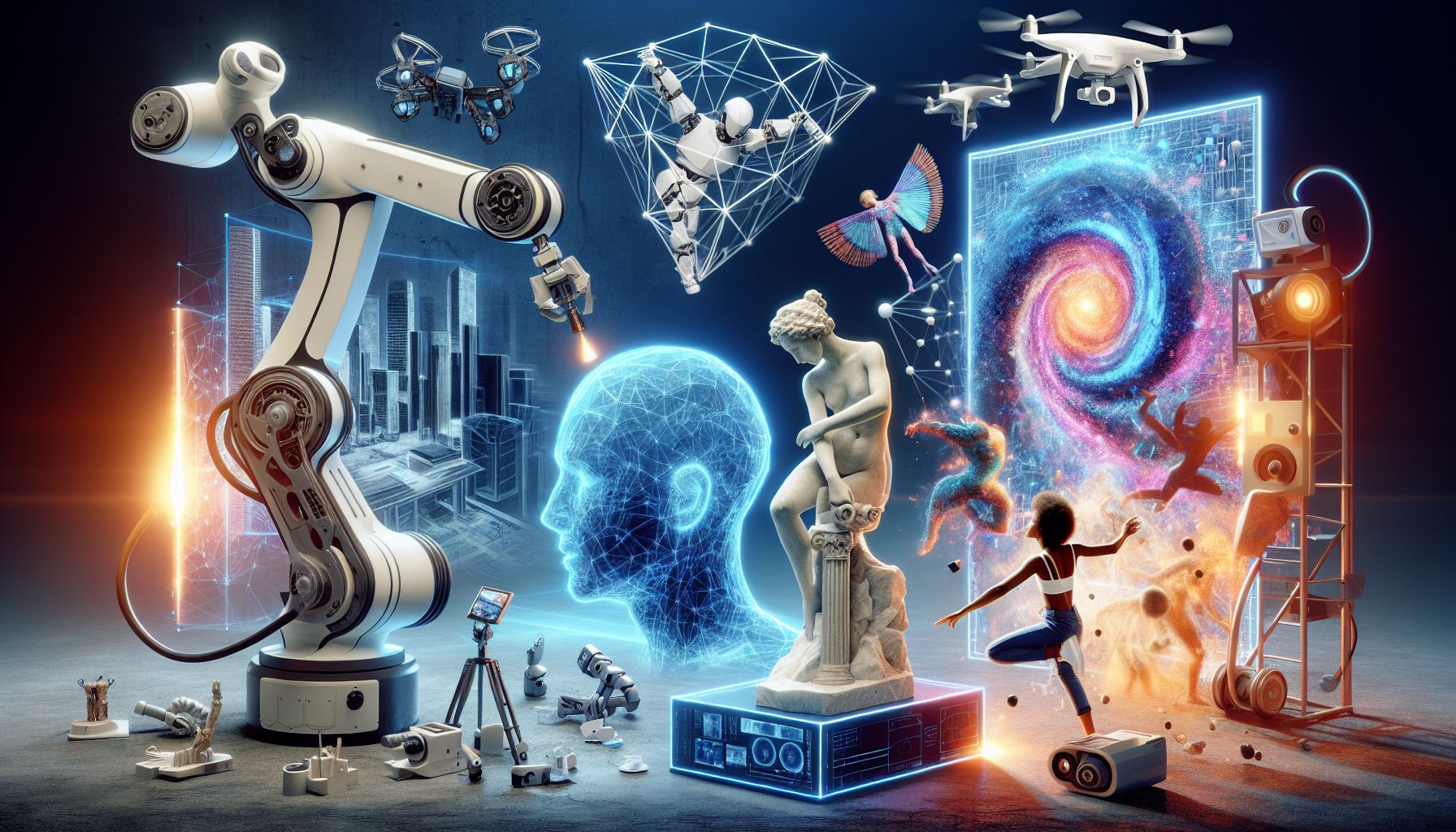
The AI Revolution: Shaping the Future of Creative Industries
Introduction
We’re living through some pretty wild times when it comes to artificial intelligence. What used to be science fiction is now changing how we work, think, and create in ways that honestly surprise me daily. This shift hits especially hard in creative fields, where AI is doing things I never thought possible just a few years ago. I want to explore how AI is changing creativity and where this might all be heading.
AI and Creativity: An Unlikely Partnership
For the longest time, everyone assumed creativity belonged exclusively to humans. The spontaneity, raw emotion, and personal fingerprints we leave on our work seemed impossible for machines to replicate. Well, AI had other plans. It’s not just copying human creativity anymore — it’s actually changing how we approach the creative process entirely.
AI in Art
Remember when making art meant you needed actual brushes and paint? Those days feel ancient now. Algorithms are creating artwork that makes traditional artists do double-takes. AICAN and DeepArt can mix artistic styles and pump out unique pieces faster than you can say “Renaissance.” AICAN has even sold pieces in real exhibitions for prices that rival human artists. That’s not just impressive — it’s kind of mind-blowing.
Art isn’t stuck in galleries anymore either. It’s everywhere on our phones and computers. Those filters that turn your selfie into a van Gogh painting? That’s AI working its magic. Since AI keeps learning and getting better, I can only imagine what kind of wild, beautiful stuff it’ll create as it studies more and more of humanity’s artistic output.
AI in Music
You know that catchy tune stuck in your head? There’s a real chance AI helped write it. Tools like AIVA (Artificial Intelligence Virtual Artist) create complex compositions for movies, games, and ads. When I listen to AI-generated music, the line between human and machine creativity gets pretty blurry. These programs actually understand harmony, rhythm, and style well enough to make music that genuinely moves people.
AI can crunch through massive music libraries and create something that feels both familiar and totally fresh. This has been a goldmine for creators who need background music, jingles, or theme songs. As AI keeps learning from our ever-growing music collection, its compositions are getting more sophisticated and diverse by the day.
AI in Writing and Storytelling
Writing seems like it should be safe from machines, right? All that creativity and personal voice — surely that’s purely human territory. Nope. AI is getting surprisingly good at storytelling and content creation. Tools built on natural language processing, like OpenAI’s GPT models, are writing everything from basic articles to stuff that’s genuinely engaging to read.
Picture this: you’re writing a story and AI jumps in to help with suggestions, dialogue, or even entire scenes. AI can spot patterns in existing stories and predict what makes narratives work, create interesting characters, and keep themes consistent throughout a piece. We’re entering an era of true collaboration between human and artificial creativity.
The Benefits of AI in Creative Industries
Here’s the thing — AI isn’t trying to replace human creativity. It’s making creativity more accessible to everyone. You don’t need years of training or expensive equipment anymore to create something professional-looking. AI gives creators new toys to play with and ways to push their medium in directions they never considered.
Take a musician just starting out or someone learning digital art. They now have access to sophisticated tools that can bring their work up to professional quality. Experienced creators can tap into AI’s vast knowledge for inspiration they might never have found on their own.
For businesses, AI streamlines workflows by handling repetitive tasks and predicting trends. It can spot cultural shifts and audience preferences, helping artists focus on themes and styles that actually connect with people. That’s pretty valuable in a world where relevance can make or break creative work.
Challenges and Ethical Considerations
Of course, AI in creative fields isn’t all sunshine and roses. We’re grappling with some serious questions about originality and ownership. When AI creates something, who gets the credit? The person who built the algorithm? The human who set the parameters? The machine itself? These aren’t just philosophical questions — they have real legal and financial implications.
Then there’s the bias problem. AI learns from existing content, which means it absorbs all the biases and stereotypes already present in human-created work. Unless we’re really careful about training data and actively work to counteract these biases, AI could end up perpetuating the same problems we see in society.
I also worry about market saturation. If AI can churn out content at lightning speed, we might end up drowning in artificial creativity while devaluing human-made work. Finding the right balance between AI assistance and genuine human creativity is going to be an ongoing challenge.
Conclusion
The relationship between AI and creativity is still evolving, and honestly, I find it fascinating to watch. AI is definitely capable of creating art, music, and stories that genuinely impress me. But its real value isn’t in replacing human creativity — it’s in expanding what’s possible and making creative tools available to more people.
As we navigate this new territory, we need to be thoughtful about how we integrate these technologies. The goal should be enhancing human creativity, not overwhelming it. I think the most exciting possibilities come from collaboration between human imagination and AI capabilities.
Instead of viewing AI as competition, I see it as a creative partner with unique strengths. The work that comes from this collaboration could take creativity in directions we haven’t even imagined yet.
Whether you’re a working creative or just someone fascinated by where technology is heading, AI in creative industries offers a compelling look at what’s coming. We’re still in the early stages of figuring out what’s possible, and that’s what makes this whole thing so exciting to follow.